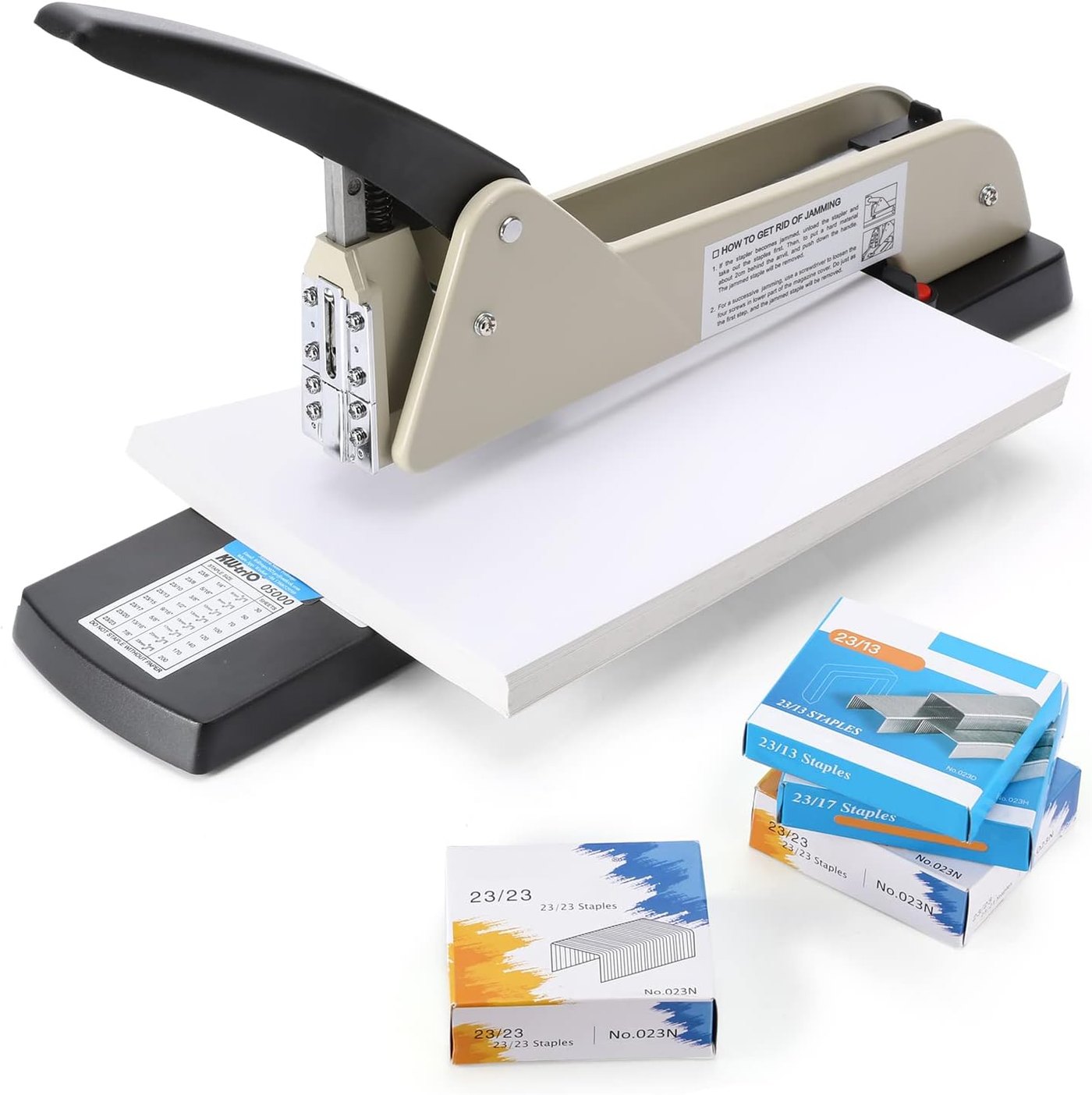
Choosing a heavy-duty stapler is about smooth packets, fewer jams, and less hand strain when normal desktop staplers stop being enough. Start with the LeStallion shortlist for best staplers for heavy-duty use, then use the office-fit notes below.
Start with real sheet counts
Heavy-duty staplers are bought for capacity, but the useful number is the stack people staple every week, not the maximum printed on the box. Count common packets, training handouts, contracts, invoices, and mailroom bundles. A stapler rated far above the normal stack may feel bulky, while one rated too close to the limit can jam when paper humidity or cardstock changes the stack.
For safety, storage, and maintenance, make the check practical by gathering a real stack of paper, a few sheets of cardstock, and the refill type you expect to keep in stock. Staple slowly once, then repeat as if a busy admin team were preparing multiple packets. The right tool feels controlled, leaves a neat closure, and makes the next packet feel predictable rather than lucky.
Watch for clean alignment
Thick packets need straight pressure. A good heavy-duty stapler keeps pages aligned as the handle comes down, drives the staple squarely, and releases without tearing the top sheet. Alignment matters in offices because crooked staples make documents harder to scan, file, and present to clients.
For safety, storage, and maintenance, make the check practical by gathering a real stack of paper, a few sheets of cardstock, and the refill type you expect to keep in stock. Staple slowly once, then repeat as if a busy admin team were preparing multiple packets. The right tool feels controlled, leaves a neat closure, and makes the next packet feel predictable rather than lucky.
Compare force and handle comfort
Some heavy-duty staplers rely on brute force, while others use leverage to reduce effort. Test the handle angle, grip surface, and return motion. Shared office tools should be usable by different people without wrist strain. A comfortable stapler encourages proper use instead of repeated half-presses that cause jams.
For safety, storage, and maintenance, make the check practical by gathering a real stack of paper, a few sheets of cardstock, and the refill type you expect to keep in stock. Staple slowly once, then repeat as if a busy admin team were preparing multiple packets. The right tool feels controlled, leaves a neat closure, and makes the next packet feel predictable rather than lucky.
Check staple compatibility
Refills decide long-term convenience. Confirm staple size, leg length, and whether the tool needs proprietary cartridges. Offices should keep compatible staples nearby and label the drawer so people do not force the wrong refill. The best stapler is only reliable when its consumables are easy to replace.
For safety, storage, and maintenance, make the check practical by gathering a real stack of paper, a few sheets of cardstock, and the refill type you expect to keep in stock. Staple slowly once, then repeat as if a busy admin team were preparing multiple packets. The right tool feels controlled, leaves a neat closure, and makes the next packet feel predictable rather than lucky.
Plan throat depth and document layout
Throat depth controls where the staple lands. Standard corner stapling needs less reach, but booklets, reports, and center-stapled packets need deeper placement. Buyers should picture the largest document, the preferred staple position, and whether the paper must sit flat against a guide.
For safety, storage, and maintenance, make the check practical by gathering a real stack of paper, a few sheets of cardstock, and the refill type you expect to keep in stock. Staple slowly once, then repeat as if a busy admin team were preparing multiple packets. The right tool feels controlled, leaves a neat closure, and makes the next packet feel predictable rather than lucky.
Think about shared workstations
A stapler used by one person can be optimized for that person. A stapler used in a mailroom, school office, reception desk, or admin area needs clearer instructions, stable footing, and visible refill access. It should survive hurried use without sliding, tipping, or hiding a jammed staple.
For safety, storage, and maintenance, make the check practical by gathering a real stack of paper, a few sheets of cardstock, and the refill type you expect to keep in stock. Staple slowly once, then repeat as if a busy admin team were preparing multiple packets. The right tool feels controlled, leaves a neat closure, and makes the next packet feel predictable rather than lucky.
Build a jam recovery routine
Even good staplers jam occasionally. Look for a clear release mechanism, accessible staple channel, and sturdy pusher. Offices should keep a small removal tool nearby and teach users not to pound the handle after a misfire. Fast recovery protects both the stapler and the documents.
For safety, storage, and maintenance, make the check practical by gathering a real stack of paper, a few sheets of cardstock, and the refill type you expect to keep in stock. Staple slowly once, then repeat as if a busy admin team were preparing multiple packets. The right tool feels controlled, leaves a neat closure, and makes the next packet feel predictable rather than lucky.
Balance durability with storage
Metal construction, rubber feet, and replaceable parts can matter more than a sleek shell. At the same time, the tool needs a practical home. A heavy stapler left loose in a drawer can damage other supplies, while one stored too far away will be replaced by a weak desktop stapler at the worst moment.
For safety, storage, and maintenance, make the check practical by gathering a real stack of paper, a few sheets of cardstock, and the refill type you expect to keep in stock. Staple slowly once, then repeat as if a busy admin team were preparing multiple packets. The right tool feels controlled, leaves a neat closure, and makes the next packet feel predictable rather than lucky.
After narrowing capacity, comfort, and refill needs, revisit the LeStallion comparison of best staplers for heavy-duty use for final product details.
Final office trial before buying
Before choosing, write a simple trial list: standard packet, thick packet, cardstock cover, repeated use, refill check, and jam release. This takes only a few minutes but reveals whether the stapler is truly office-ready. A model that performs well once but feels awkward after ten packets may not be the right choice for shared administrative work.
Also consider where the stapler will live. Reception desks, print rooms, teacher workrooms, and small business offices each create different habits. A heavier tool can be excellent if it has a stable home, clear labeling, and compatible staples nearby. Without that setup, people may avoid it and overwork lighter staplers instead.
Finally, treat durability as a workflow feature. A strong frame, reliable pusher, and clean jam release reduce interruptions. The most useful heavy-duty stapler is not the most dramatic-looking one; it is the one that quietly handles thick packets week after week without turning simple paperwork into a repair task.
Maintenance and supply checklist
After purchase, make the stapler easy to keep reliable. Store the correct staple size in the same drawer, label the refill type, and note the maximum practical sheet count on a small card. Clean paper dust from the channel, remove bent staples promptly, and avoid using the tool as a general press for materials it was not designed to fasten. These habits matter in offices where several people share the same supply station.
If the stapler will support HR packets, classroom handouts, client packets, or shipping documents, build a simple backup plan. Keep a smaller desktop stapler for light jobs, a staple remover for mistakes, and a clearly marked heavy-duty tool for thick bundles. That division prevents unnecessary wear and makes the office workflow easier for new staff to understand. It also keeps purchasing decisions clearer because the team can see which jobs truly need heavy-duty capacity and which jobs only need a regular desktop tool. When supplies are organized this way, thick packets stop becoming emergency repairs and ordinary paperwork stays fast, tidy, consistent, predictable, and easier to file without delays, rework, frustration, torn pages, mismatched staples, or repeated trips back to the supply cabinet during deadline-heavy office days and packet preparation runs.
For the previous cloud support article in this series, see the row 264 electric desk riser guide. This backlink stays near the bottom so the stapler guidance remains focused.