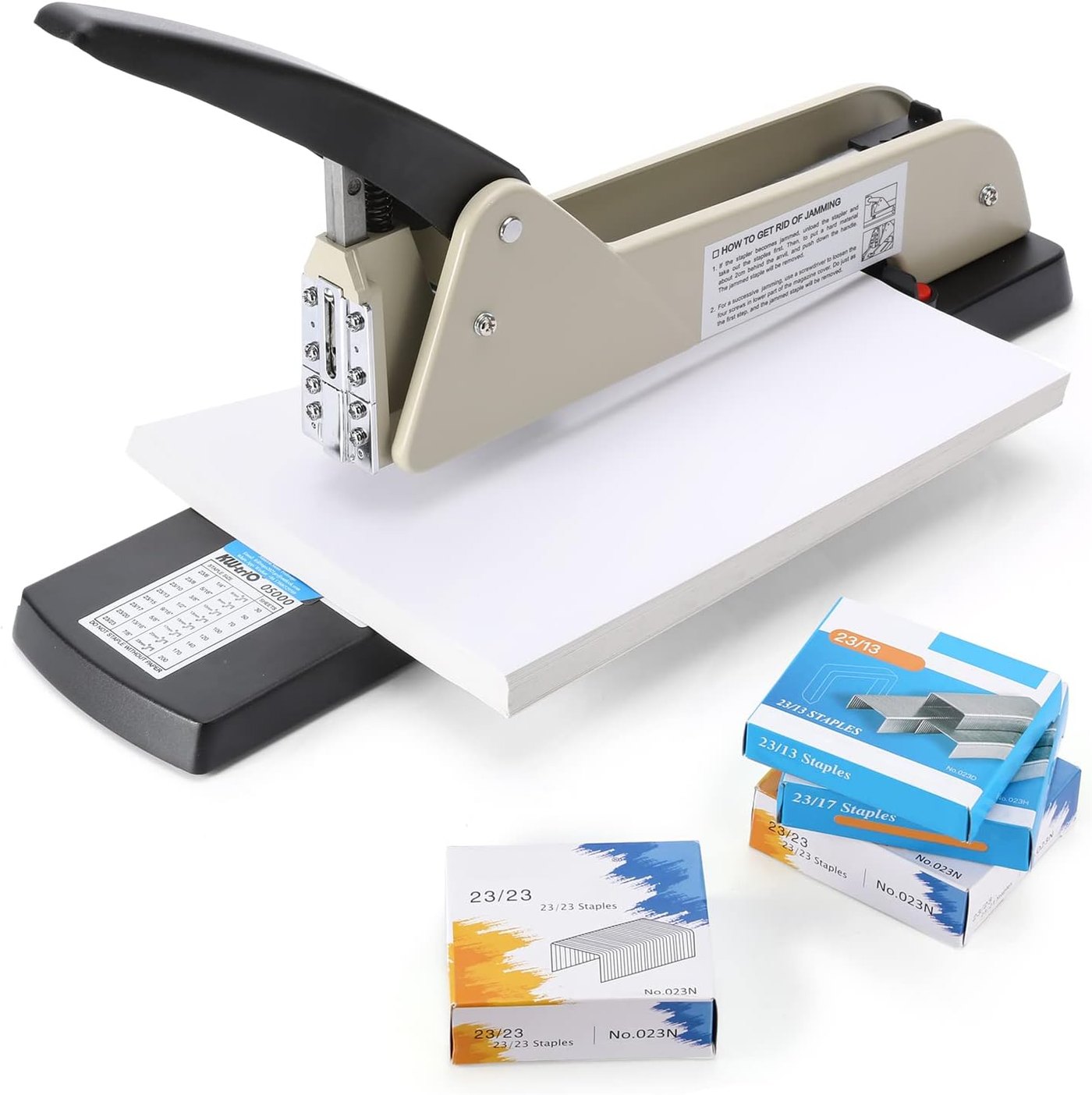
Heavy-duty staplers are bought for capacity, but the useful number is the stack people staple every week, not the maximum printed on the box. Count common packets, training handouts, contracts, invoices, and mailroom bundles. A stapler rated far above the normal stack may feel bulky, while one rated too close to the limit can jam when paper humidity or cardstock changes the stack. Thick packets need straight pressure. A good heavy-duty stapler keeps pages aligned as the handle comes down, drives the staple squarely, and releases without tearing the top sheet. Alignment matters in offices because crooked staples make documents harder to scan, file, and present to clients. Some heavy-duty staplers rely on brute force, while others use leverage to reduce effort. Test the handle angle, grip surface, and return motion. Shared office tools should be usable by different people without wrist strain. A comfortable stapler encourages proper use instead of repeated half-presses that cause jams. Refills decide long-term convenience. Confirm staple size, leg length, and whether the tool needs proprietary cartridges. Offices should keep compatible staples nearby and label the drawer so people do not force the wrong refill. The best stapler is only reliable when its consumables are easy to replace. Throat depth controls where the staple lands. Standard corner stapling needs less reach, but booklets, reports, and center-stapled packets need deeper placement. Buyers should picture the largest document, the preferred staple position, and whether the paper must sit flat against a guide. A stapler used by one person can be optimized for that person. A stapler used in a mailroom, school office, reception desk, or admin area needs clearer instructions, stable footing, and visible refill access. It should survive hurried use without sliding, tipping, or hiding a jammed staple. Even good staplers jam occasionally. Look for a clear release mechanism, accessible staple channel, and sturdy pusher. Offices should keep a small removal tool nearby and teach users not to pound the handle after a misfire. Fast recovery protects both the stapler and the documents. Metal construction, rubber feet, and replaceable parts can matter more than a sleek shell. At the same time, the tool needs a practical home. A heavy stapler left loose in a drawer can damage other supplies, while one stored too far away will be replaced by a weak desktop stapler at the worst moment.
Privacy Policy
Trust and contact information for this heavy-duty stapler support resource.